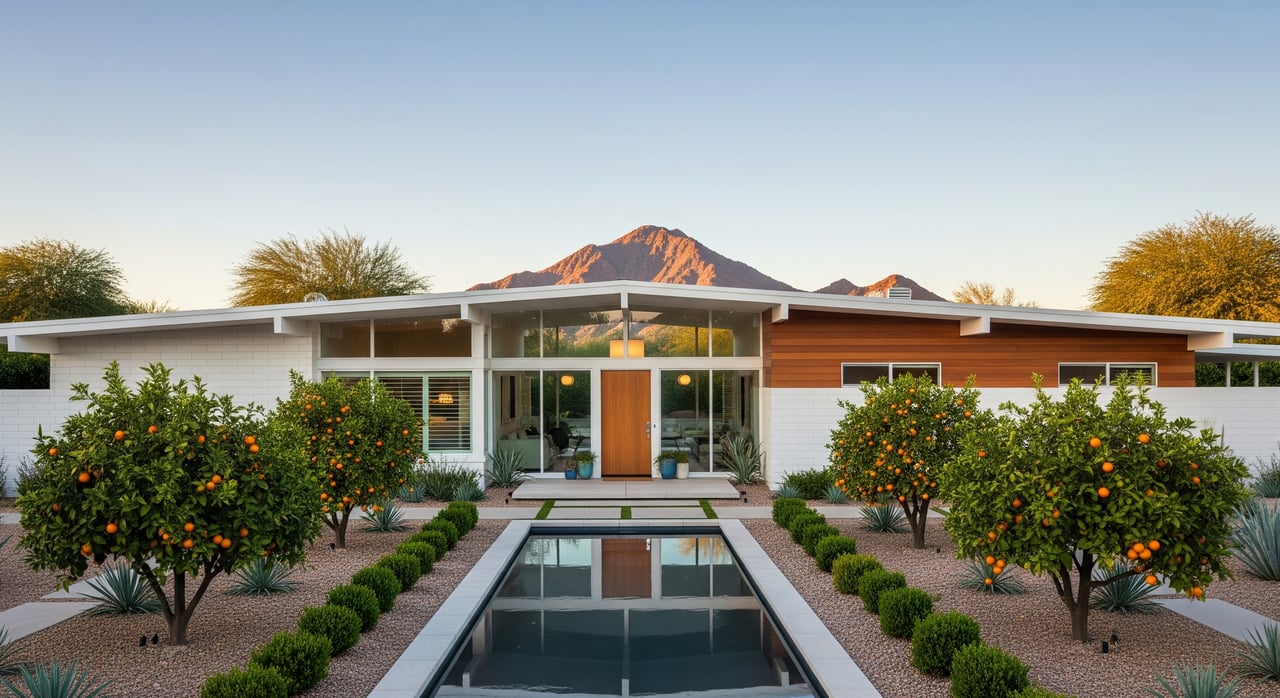
Is Arcadia calling your name, but you’re worried about overpaying? You’re not alone. Arcadia is one of Phoenix’s most competitive micro-markets, and the usual price-per-square-foot shortcuts can mislead you. In this guide, you’ll learn how to separate land value from structure value, judge renovation quality, spot appraisal risk, and write an offer that protects your budget. Let’s dive in.
Why Arcadia pricing is different
Arcadia isn’t priced like the broader Phoenix market. Here, you’re often competing for the lot as much as the house. Large parcels, mature trees, and rebuild activity mean two homes with the same square footage can have very different values.
Lot attributes, orientation, and proximity to Camelback matter more than in many neighborhoods. New builds and high-end full remodels also create top-of-market comparables that can pull prices up. If you compare Arcadia to Phoenix-wide averages, you can overpay. Focus on block-by-block analysis instead.
Start with the lot
In Arcadia, the lot sets the floor for value. You can change finishes over time, but you can’t change setbacks, depth, or views. Start by understanding what the land itself is worth, then layer the home’s condition on top.
Lot factors to evaluate
- Lot size, depth, and width, especially the buildable area after setbacks.
- Orientation and solar exposure for passive cooling and outdoor living.
- Setbacks, easements, and utility corridors that shrink the build envelope.
- Topography and drainage that affect pools and hardscape design.
- Mature trees and landscaping that add appeal but can add mitigation costs.
- Existing improvements like pools, guest houses, or detached garages/ADUs.
- Micro-location within Arcadia, including proximity to Camelback Road, parks, and retail.
How to estimate land value
- Separate the price into land value plus improvement value. Treat the house as secondary if you expect major changes.
- Use recent teardown or lot-only sales in Arcadia and nearby areas as your best land comps.
- Analyze price per buildable square foot, adjusting for easements and irregular shapes.
- Ask local builders for ballpark land-plus-build budgets to gauge what a rebuild buyer would rationally pay for the lot.
Pitfalls to avoid
- Using distant or non-comparable sales, especially different lot sizes or orientations.
- Ignoring recorded easements or unusual parcel shapes that limit build potential.
- Overpaying for curb appeal or trees without quantifying replacement or mitigation costs.
Renovation and rebuild reality
Arcadia’s active teardown pipeline creates a two-tier market: older homes and new construction. When a nearby rebuild sells at a premium, it can set a high comparable that influences pricing for surrounding properties.
Renovation quality and pricing impact
- Cosmetic refresh: Mostly improves marketability, limited value lift.
- Mid-level remodel: Kitchens, baths, and system updates can add real value if finished to local standards.
- High-end/full remodel or rebuild: Can command top-of-market pricing, but costs do not always fully recoup. Demand and finish level matter.
When most recent sales are new builds, appraisers may cap valuation on an older footprint. If significant work was done without permits, lenders and appraisers may discount those improvements or require proof. Always verify what was permitted and finalized.
Permits, documentation, and risk
Arcadia buyers should review permit history for any home under consideration. Pools, grading, retaining walls, and structural changes typically require permits. If the file shows open permits or missing finals, you may face delays or repair requirements.
Non-permitted work introduces insurance and resale risks. Construction nearby can mean noise and dust in the short term. After major improvements or a rebuild, expect potential property tax reassessment.
A step-by-step valuation plan
Use two parallel valuations so you never pay more than the land or the lifestyle is worth to you.
- Renovate-and-retain scenario
- Price the home as it sits, then add a realistic budget to reach your desired standard.
- Get ballpark bids for big-ticket items: roof, HVAC, electrical panel, plumbing, windows, and kitchens/baths.
- Add a 10 to 20 percent contingency for unknowns.
- Teardown-and-rebuild scenario
- Estimate land value using teardown comps and price-per-buildable-square-foot.
- Get an early conversation with a local builder to understand all-in land-plus-build budgets.
- Compare that total to your target payment, timeline, and lifestyle needs.
Choose your maximum price based on the less favorable of the two scenarios. This keeps emotion from driving your offer beyond rational limits.
Due diligence essentials
Beyond the general inspection, add targeted checks based on Arcadia’s housing stock and climate.
- Structural engineer if there are signs of foundation or structural movement.
- Pool inspection for equipment condition, safety compliance, and shell integrity.
- Roofing and HVAC evaluations for remaining service life and replacement timing.
- Termite inspection, given Phoenix’s climate.
- Survey or title review to confirm boundaries, easements, and setbacks.
- Permit history review to verify that major work was permitted and finalized.
If you discover unpermitted work or open permits, negotiate credits, remediation before close, or funds held in escrow.
Offer strategy that protects price
A strong offer can be competitive and still guard against overpaying.
- Use inspection contingencies with clear timelines to keep leverage.
- Consider an escalation clause with a firm price cap tied to your dual-valuation analysis.
- Ask for documentation of improvements, including permits, warranties, and contractor details.
- Use an appraisal contingency if there is valuation risk. If you add appraisal-gap coverage, cap the dollar amount at a level you can afford in a worst case.
- Strengthen terms with earnest money and clean timelines, but keep key contingencies that protect your valuation.
- When list price is driven by lot value, consider asking the seller to allocate price between land and improvements in the contract. This can help the appraiser interpret the deal structure when accurate.
Financing that fits your plan
If you intend to renovate or rebuild, discuss loan structure early. Standard mortgages require appraisals based on current condition. Construction or rehab loans use different underwriting and draw schedules that affect cash flow and carrying costs.
If you plan a teardown, confirm your lender’s requirements and timing for land acquisition, construction, and any reappraisal. Also plan for possible property tax increases after substantial improvements.
Red flags you may be overpaying
- Most comps are new builds and few are original-condition homes, but the subject property is older without equivalent finishes.
- The seller cannot provide permits or documentation for major upgrades.
- Your valuation relies on a small number of outlier sales that do not match the lot or build quality.
- You are considering exceeding your maximum because of a wish-list location without numbers to support it.
Arcadia buyer checklist
Use this quick list to stay grounded from first showing to final offer.
- Separate land and structure value in your analysis.
- Pull teardown and new-construction comps to isolate land value.
- Measure buildable area, setbacks, easements, and orientation.
- Verify permit history and final inspections for major work.
- Order targeted inspections: structural, pool, roof/HVAC, termite, and survey.
- Build two valuations: renovate-and-retain and teardown-and-rebuild.
- Set a hard max price using the less favorable scenario.
- Structure offer with contingencies, a capped escalation, and a plan for appraisal risk.
- Align financing with your strategy: standard, rehab, or construction-to-permanent.
- Budget for possible tax reassessment after improvements.
Ready to buy smart in Arcadia?
Arcadia rewards buyers who think like investors and plan like builders. When you evaluate the lot first, verify renovation quality, and structure your offer for appraisal and permit realities, you can compete with confidence without overpaying. If you would like a local, hands-on partner to help you analyze land value, vet permits, and secure the right property, connect with Vanessa Roark for a tailored plan.
FAQs
What makes Arcadia pricing unique?
- Arcadia is a Phoenix micro-market where lot attributes, orientation, and high rebuild activity drive value more than citywide averages.
How do I estimate Arcadia lot value?
- Use recent teardown or lot-only sales and price-per-buildable-square-foot, then validate with a builder’s land-plus-build budget.
How do rebuilds affect appraisals and offers?
- New builds can set high comps, creating gaps when buying older homes; keep appraisal contingencies and avoid exceeding a rational, capped maximum.
Which permits should I verify before buying?
- Review building permits and final inspections for pools, grading, structural work, and major systems; address any open permits before closing.
Should I use an escalation clause in Arcadia?
- Consider one with a firm cap based on dual valuations, and pair it with strong terms plus contingencies that protect you from appraisal or permit risks.