If you are shopping or selling in Arcadia, the backyard is not just extra space. It is often one of the most important parts of the property story. In a Phoenix neighborhood known for large lots, historic citrus trees, and Camelback Mountain as a constant backdrop, outdoor living shapes how a home feels and functions. This guide will show you what defines Arcadia outdoor living, what buyers notice, and what details matter most when you evaluate a property. Let’s dive in.
Why outdoor living matters in Arcadia
Arcadia/Camelback Mountain is recognized by the City of Phoenix neighborhood system as a distinct area bounded by Stanford Drive, Indian School Road, Invergordon/64th Street, and 44th Street. The neighborhood association describes it as a preserved residential district with large lots, broad lawns, generous setbacks, and historic citrus trees.
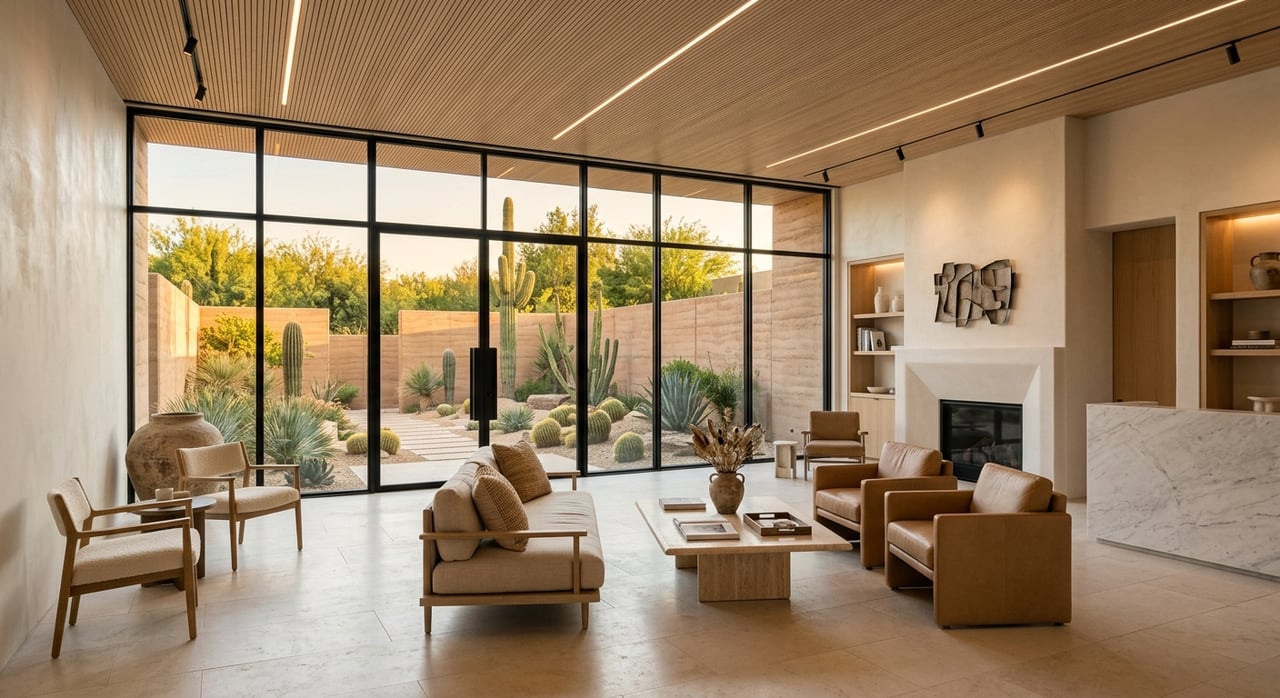
That physical layout naturally gives outdoor space a larger role in daily life. In Arcadia, the yard often feels like an extension of the house rather than a separate feature. Buyers are not just looking at square footage indoors. They are also judging how the exterior spaces support entertaining, relaxing, and enjoying the setting.
Camelback Mountain also plays a big role in how outdoor areas are experienced. Since it is one of Phoenix’s most prominent landmarks, many Arcadia homes benefit from outdoor spaces that frame or protect mountain views. A patio, pool deck, or seating area can feel more valuable when it captures that visual connection.
Arcadia outdoor spaces reflect the climate
Phoenix weather makes outdoor design practical as much as it is beautiful. According to Phoenix climate normals for 1991 through 2020, the city has an annual average temperature of 75.6°F, just 7.22 inches of annual rainfall, and an average of 111.3 days each year at or above 100°F.
Summer heat is especially important when you look at a backyard. Average daily highs reach 104.2°F in June, 106.5°F in July, and 105.1°F in August. In that kind of climate, shade, cooling features, and efficient irrigation are not luxury add-ons. They are central to how usable the space will be.
That is why strong Arcadia outdoor design usually starts with comfort. Covered areas, thoughtful orientation, and materials that support outdoor use in hot weather all matter. Homes that handle the climate well tend to feel more livable year-round.
The classic Arcadia backyard formula
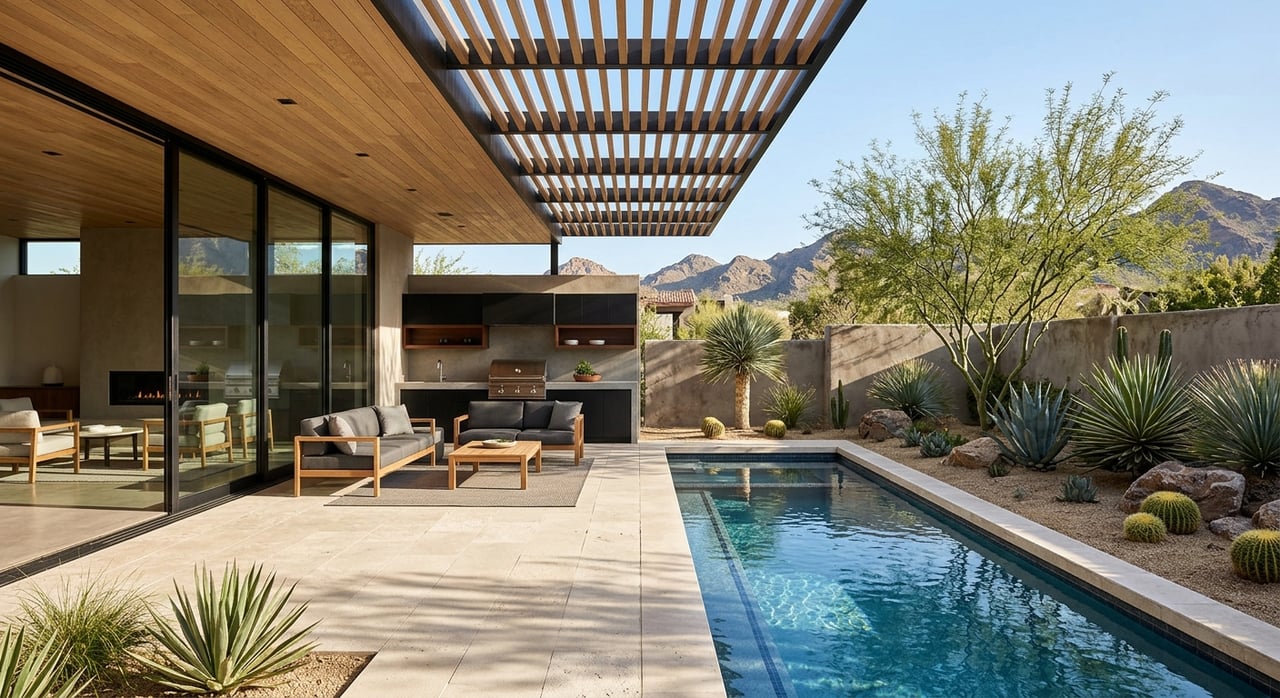
Many Arcadia homes follow a recognizable outdoor-living pattern. The most common setup is a layered backyard with a deep covered patio, a pool or spa, mature landscaping, and an easy transition from the house to the entertaining area.
This formula fits the neighborhood’s large-lot character. It also aligns with how luxury outdoor living is often presented in local Arcadia properties, where buyers expect exterior spaces to function like open-air rooms.
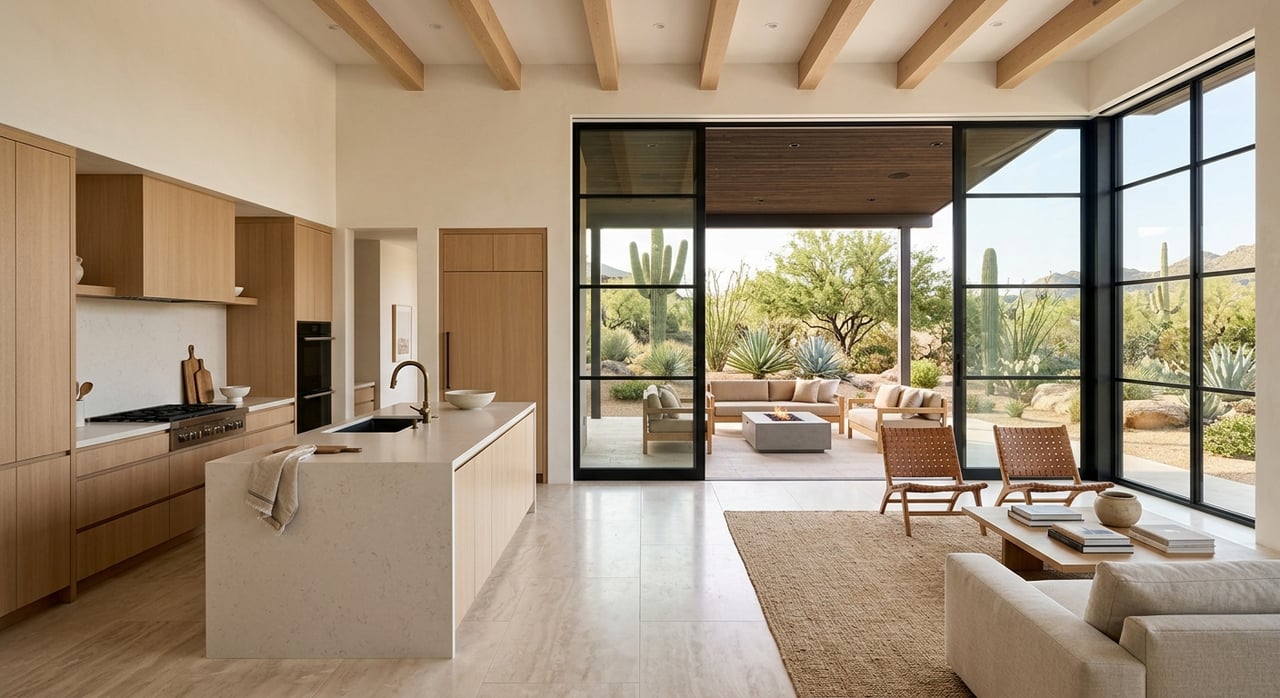
The strongest outdoor spaces usually feel connected, not pieced together. You move from interior living areas to a shaded patio, then to a pool terrace, lawn, garden, or fire feature without awkward breaks. That flow is often what makes a backyard feel finished.
Features that define standout Arcadia homes
Covered patios that extend the home
A covered patio is one of the most important features in an Arcadia backyard. In Phoenix, a patio cover is defined as a one-story structure under 12 feet high, open on two or more sides, attached to the home, and used for recreational and outdoor living purposes.
For buyers, the value is simple. A deep covered patio creates shade, supports outdoor dining and gathering, and makes the yard usable during more of the year. It also helps blur the line between indoor and outdoor living, which is a major part of Arcadia’s appeal.
Pools and spas for cooling and recreation
In a market with extended summer heat, a pool often becomes a central backyard feature. It supports both daily use and entertaining, and in many Arcadia homes it anchors the full outdoor layout.
A spa can add another layer of use and atmosphere. Together, a pool and spa often create the resort-style feel that buyers associate with higher-end Phoenix properties.
Landscaping with maturity and efficiency
Arcadia is known for mature landscaping and historic citrus character, but buyers are also paying closer attention to water use. Phoenix notes that outdoor irrigation can account for up to 70% of household water use.
The city recommends desert landscaping with low-water-use, desert-friendly plants adapted to Phoenix’s hard soil and infrequent rainfall. The Arizona Department of Water Resources defines xeriscaping as a landscaping approach that uses indigenous and drought-tolerant plants, shrubs, and ground cover.
That does not mean every Arcadia yard looks sparse or minimal. It means the best landscapes balance beauty with practical water management. A backyard can feel lush and still be designed with drip irrigation, drought-tolerant planting, and lower long-term maintenance in mind.
BBQs, fire features, and outdoor gathering zones
Outdoor spaces stand out when they support clear use cases. A built-in BBQ, firepit, or dedicated seating area gives the yard purpose and helps buyers imagine how they would actually live there.
These features are especially effective when they are integrated into the layout rather than added as afterthoughts. In Arcadia, the goal is often to create an outdoor room that feels intentional and ready for entertaining.
Mountain views and sightlines
In Arcadia, views are part of the lifestyle package. Because Camelback Mountain is such a defining landmark, outdoor spaces often feel more compelling when they preserve or frame that backdrop.
This can influence how buyers respond to a property. A seating area positioned toward the mountain or a patio designed to take advantage of sightlines may leave a stronger impression than a larger yard with less visual connection.
What buyers should check before they fall in love
Beautiful outdoor spaces still need practical due diligence. In Arcadia, buyers should look beyond the lifestyle appeal and confirm that major improvements were completed properly.
Ask about permits and final inspections
If a home includes a covered patio, ramada, pergola, or pool house, ask whether it was permitted and final-inspected. The City of Phoenix notes that many residential projects require permits and inspections, including patio covers, fences or walls, porch enclosures, and detached structures larger than 200 square feet.
This matters because unpermitted work can create delays, added cost, or future compliance questions. It is also worth asking whether later changes stayed within code after the original construction.
Watch for added approval conditions
Some properties may need more than a standard permit review. Phoenix notes that hillside, historic-preservation, or floodplain conditions can trigger additional approvals before permit review begins.
That does not automatically mean there is a problem. It simply means buyers should understand whether any special conditions applied to the work and whether all approvals were completed.
Verify pool barrier compliance
If the property has a pool, safety compliance is essential. The City of Phoenix states that pools are checked for code compliance and health and safety issues, and approved barriers must remain in place.
The city’s pool-barrier standards include self-closing, self-latching gates and other specific measurements. Phoenix also states that a new permit is required if an approved pool barrier is enlarged, altered, repaired, removed, converted, or replaced.
Evaluate irrigation and upkeep
A backyard may photograph beautifully but still come with higher upkeep than expected. Since outdoor water use is often the largest share of household water consumption, buyers should ask how the irrigation system is set up and whether the landscape was designed for efficient use.
Phoenix provides guidance on drip irrigation, rainwater harvesting, and gray water use. In practical terms, you want to know whether the yard is set up for water-wise maintenance or whether it may demand more time and utility cost over time.
Consider the view experience
Not every Arcadia lot offers the same relationship to Camelback Mountain. Mature trees, rooflines, and later additions can all shape how the view is experienced from patios, pools, and entertaining areas.
If views matter to you, spend time in the backyard and notice what the outdoor space actually frames. In a neighborhood where setting matters, that detail can have a real impact on enjoyment and resale appeal.
What sellers can learn from Arcadia’s outdoor-living standard
If you are preparing to sell in Arcadia, your outdoor space deserves the same strategy as your interiors. Buyers in this market often expect the backyard to feel curated, functional, and visually strong.
That means presentation matters. Clean sightlines, well-maintained landscaping, and clearly defined entertaining zones can make a backyard feel more valuable before a buyer ever studies the details.
It also means documentation matters. If you added a patio cover, updated the pool barrier, or built a detached outdoor structure, having permit and inspection records ready can help reduce friction during due diligence.
For higher-end listings, outdoor living is often part of the home’s lifestyle narrative. When marketed well, the yard is not just a list of features. It becomes part of the reason a buyer connects emotionally with the property.
If you want expert guidance on how to position your Arcadia home, Vanessa Roark offers a complimentary Home Marketing & Strategy Session with a design-forward, hands-on approach tailored to Phoenix luxury properties.
FAQs
What outdoor features are most common in Arcadia homes?
- Many Arcadia homes feature a covered patio, pool or spa, mature landscaping, and a smooth transition from indoor living areas to outdoor entertaining space.
Why is shade so important in Arcadia outdoor living spaces?
- Phoenix averages 111.3 days per year at or above 100°F, so covered patios and other shade features are key to making a backyard comfortable and usable.
Do covered patios in Phoenix usually need permits?
- Yes. The City of Phoenix notes that many residential projects need permits and inspections, including patio covers.
What should buyers ask about an Arcadia pool?
- Buyers should ask whether the pool barrier meets City of Phoenix requirements and whether any barrier changes were properly permitted.
How can buyers judge whether a landscape is water-wise in Arcadia?
- Look for signs of low-water-use planting, drip irrigation, and a design suited to Phoenix’s hard soil and low rainfall.
Why do Camelback Mountain views matter in Arcadia homes?
- Camelback Mountain is a major local landmark, so outdoor spaces that preserve or frame that view often add to the property’s overall appeal.