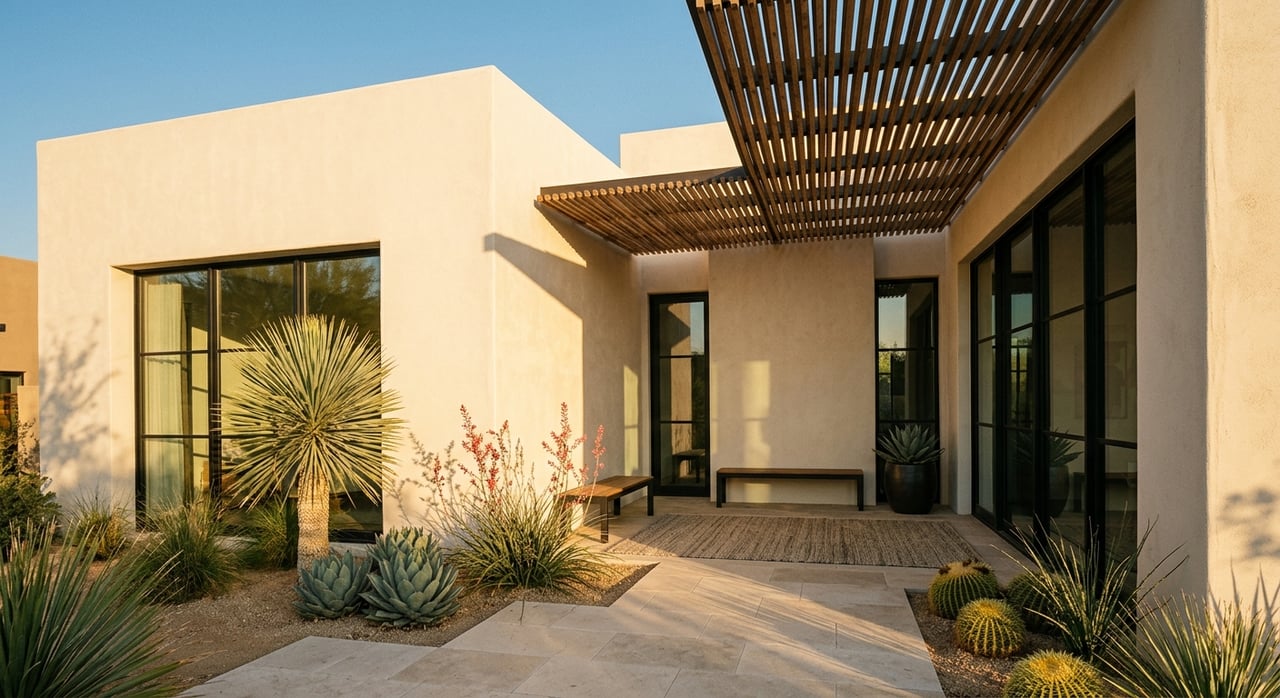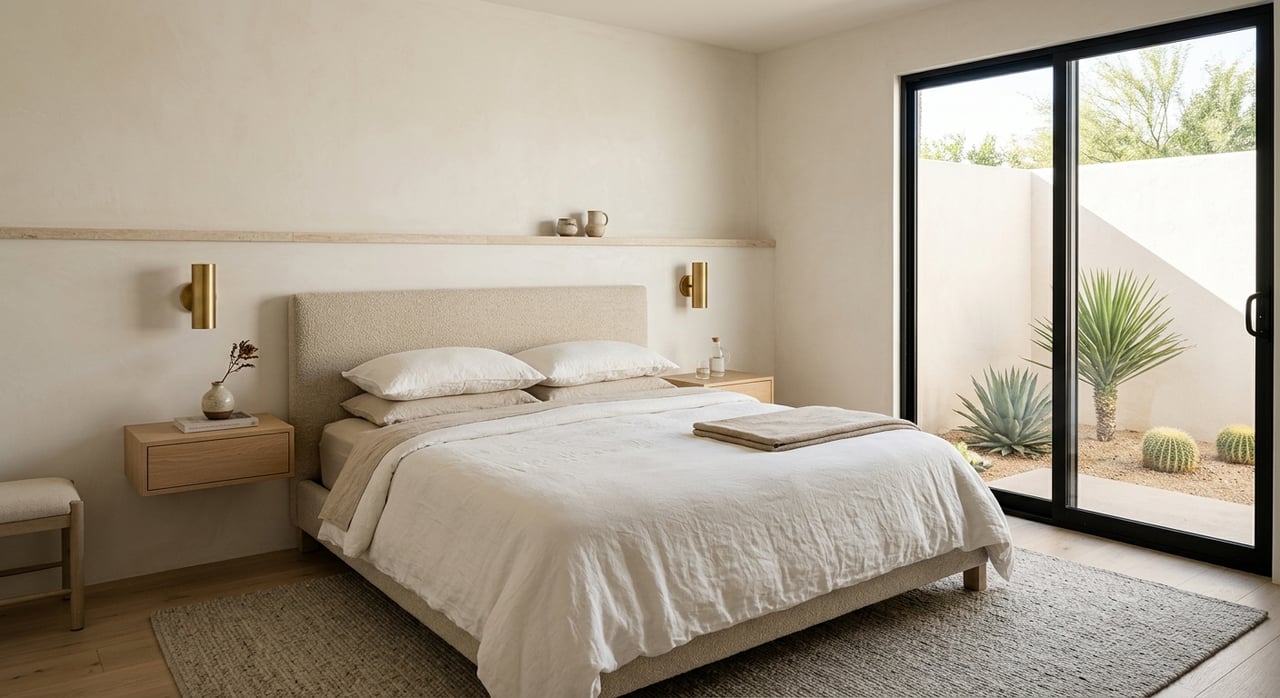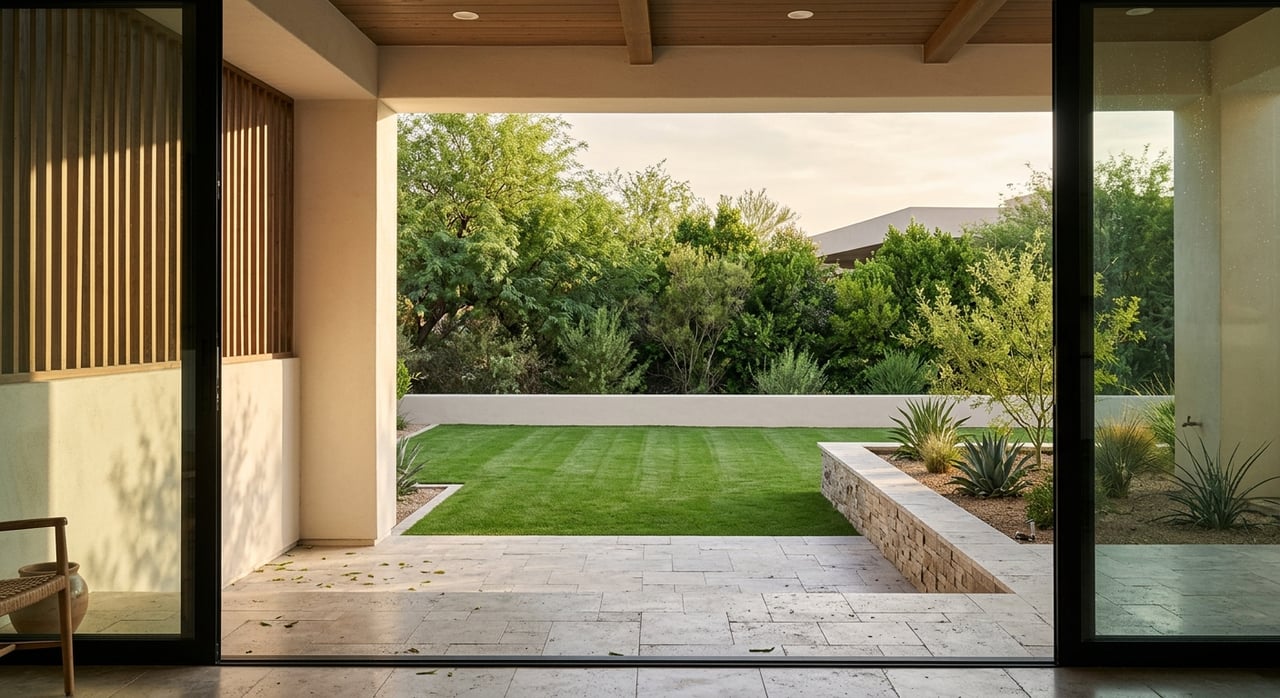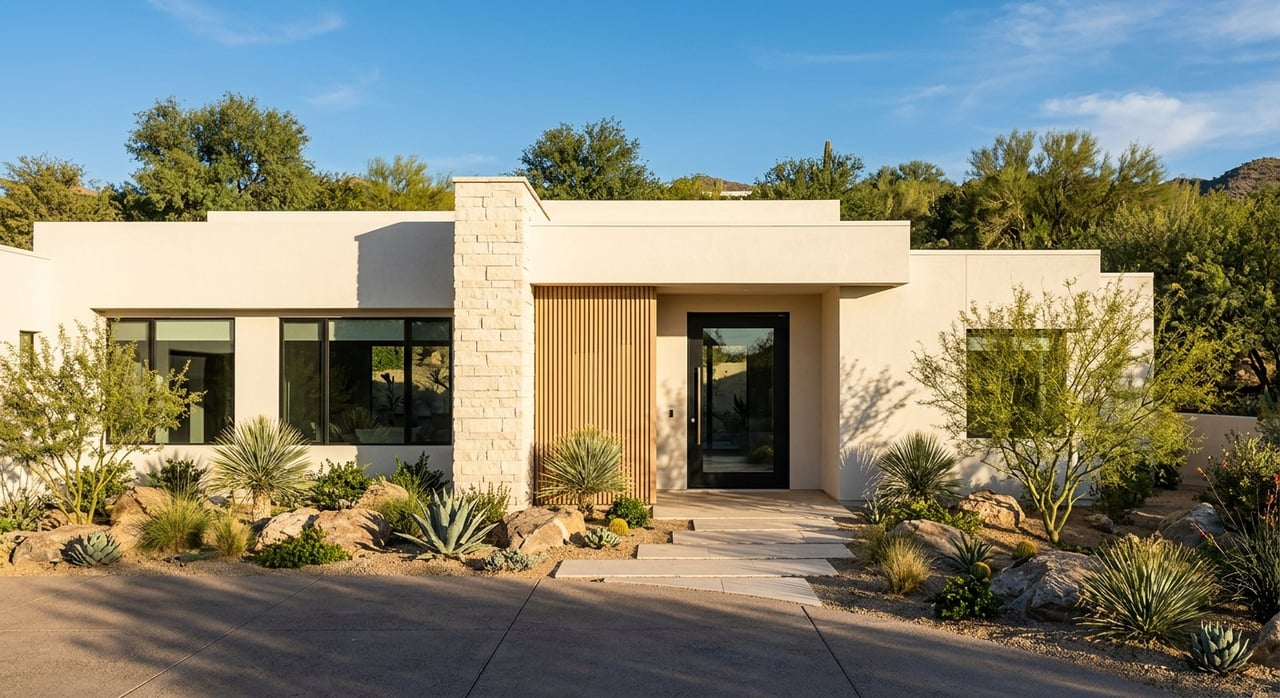
If you are deciding between Scottsdale and Paradise Valley, you are not just choosing a home. You are choosing how you want to live day to day, how much space you want around you, and how your budget lines up with your long-term plans. The good news is that both markets offer strong lifestyle appeal in very different ways, and understanding those differences can make your next move much clearer. Let’s dive in.
Scottsdale vs. Paradise Valley at a Glance
Scottsdale and Paradise Valley sit close to each other, but they serve very different buyer goals. Scottsdale is a much larger city with broad neighborhood variety, more housing types, and a wider range of price points. Paradise Valley is a smaller, more uniform luxury market built around larger residential lots, privacy, and a low-density setting.
The City of Scottsdale says the city spans 184.5 square miles and has 243,050 residents. It includes Old Town as its premier urban core and stretches north to the McDowell Sonoran Preserve, which the city describes as the largest urban wilderness area in the United States. Paradise Valley, by contrast, was incorporated to preserve a residential, minimum-one-acre lifestyle, and most of the town is zoned R-43, which generally means at least one acre per lot with one home per lot as the baseline.
Choose Based on How You Want to Live
Your best fit often comes down to daily rhythm. If you want more activity, more choices, and more neighborhood variety, Scottsdale usually gives you more ways to match your lifestyle. If you want a quieter estate setting with a stronger emphasis on privacy and open space, Paradise Valley often stands out.
Scottsdale lifestyle highlights
Scottsdale offers a broad, active lifestyle with both urban and outdoor options. Official city materials highlight more than 90 restaurants, 320 retail shops, and more than 80 art galleries in Old Town. The city also points to the 11-mile Indian Bend Wash Greenbelt, 41 parks, and 232 miles of nonmotorized trails.
That range matters if you want to be close to dining, retail, events, and recreation without limiting yourself to one type of neighborhood. Scottsdale can feel very different from one area to the next, which gives you more room to prioritize convenience, lot size, or a certain home style.
Paradise Valley lifestyle highlights
Paradise Valley’s official materials describe it as a luxury residential community known for dark skies, tranquility, open space, mountain views, and resort amenities. The town also highlights fine dining, golf, tennis, spa offerings, and luxury hotels.
In practical terms, Paradise Valley tends to appeal to buyers who want a more private residential environment and are comfortable making that setting the priority. If your vision of home centers on space, views, and a calmer pace, this market may feel more aligned.
Housing Options Are Very Different
One of the biggest differences between Scottsdale and Paradise Valley is housing variety. Scottsdale offers a much broader mix of lot sizes, neighborhood patterns, and home possibilities. Paradise Valley is far more estate-oriented and much more consistent in its residential character.
Scottsdale offers more variety
Scottsdale uses character-area planning across 24 designated areas, with seven adopted plans as of May 2026. That planning structure reflects how varied the city is. In the Cactus Corridor, for example, the city describes a diverse neighborhood with equestrian and lifestyle uses alongside suburban subdivisions.
That same plan notes low-density lots ranging from 35,000 square feet to 2.5-acre parcels, with a more rural character east of 96th Street. Another Scottsdale neighborhood plan describes Peaceful Valley as 141 homes zoned R1-7 in a suburban neighborhood category allowing 1 to 8 dwelling units per acre. Scottsdale also permits middle housing on qualifying single-family lots near Old Town and allows ADUs on qualifying single-family lots, which adds even more flexibility to the local housing mix.
For you, that can mean more choice around home type, maintenance level, guest space, and future use. If flexibility matters, Scottsdale generally gives you more possible paths.
Paradise Valley is more estate-focused
Paradise Valley is primarily zoned for single-family residential use. Most of the town is R-43, which sets a one-acre minimum, but the town also includes residential districts such as R-175 at 4 acres, R-35 at 35,000 square feet, R-18 at 18,000 square feet, and R-10 at 10,000 square feet.
This creates a much more uniform, estate-driven environment. It also matters if you are thinking ahead about remodeling or rebuilding. The town guide notes that Paradise Valley’s building and zoning rules may be more restrictive than other communities, which is important if you want to expand, reconfigure, or take on a major renovation later.
What Your Budget Buys in Each Market
Price may be the clearest dividing line between these two markets. Scottsdale spans multiple tiers, while Paradise Valley sits in a much higher luxury bracket with a higher floor.
Scottsdale pricing spans a wide range
Recent market data shows Scottsdale offers meaningful price dispersion. Redfin reports a March 2026 median sale price of $965,000 and a median of 58 days on market. Zillow reports an average home value of $858,307 and homes going pending in around 32 days, while Realtor.com reports a median listing price of about $1.06 million, roughly 3,900 homes for sale, and a median of 65 days on market.
ZIP-level data shows just how wide the spread can be. Realtor.com reports buyer metrics around $638,900 in 85251, $999,000 in 85254, $1.749 million in 85255, and $2.1 million in 85262. That range is one reason Scottsdale works for many different types of buyers, including relocators, luxury buyers, and those who want optionality.
Paradise Valley commands a premium
Paradise Valley operates in a different price category. Redfin reports a March 2026 median sale price of $4.8 million and 87 days on market. Zillow reports a median sale price of $3,658,333, a median list price of $4,633,000, and 223 homes for sale, while Realtor.com reports a median listing price of $4.99 million, 372 active listings, and a 95% sale-to-list ratio.
Neighborhood-level figures reinforce that luxury positioning. Realtor.com reports medians around $2.737 million in Mountain Shadow Resort and $5.45 million in Paradise Hills. If you are comparing the two markets strictly on price, Paradise Valley is not just more expensive. It is structured as a high-end estate market from the start.
Land, Privacy, and Flexibility
Many buyers ask a simple question: how much space do I really get for my money? In this comparison, the answer usually favors Paradise Valley for lot size and privacy, while Scottsdale tends to win on variety and flexibility.
Paradise Valley’s zoning pattern supports larger lots and a lower-density feel across much of the town. That often translates to more separation between homes, more room for outdoor living, and a more estate-like setting. If privacy and a larger homesite are top priorities, Paradise Valley has a clearer identity.
Scottsdale can still offer generous lot sizes in certain areas, especially in neighborhoods like the Cactus Corridor where lots may range up to 2.5 acres. But as a whole, Scottsdale gives you more variation rather than one consistent lot standard. That can be a major advantage if you want to balance outdoor space with lower upkeep, a different home type, or future flexibility such as an ADU on a qualifying lot.
Which Market Fits Your Long-Term Goals?
The smartest way to choose is to think beyond the first showing. Your next move should support the way you want to live now and the way you may want to use the property later.
Scottsdale may fit you if you want:
- More neighborhood variety
- More price entry points
- Greater flexibility in home type and lot size
- Closer access to dining, retail, galleries, and events
- Potential options for qualifying ADUs or a broader housing mix
Scottsdale is often a strong fit if you want choices. It can also suit buyers who are balancing lifestyle with budget and want room to refine priorities by neighborhood.
Paradise Valley may fit you if you want:
- A more consistent luxury residential setting
- Larger lots and a lower-density environment
- Stronger emphasis on privacy and open space
- Mountain views and estate-oriented surroundings
- A property purchase centered on long-term luxury ownership
Paradise Valley is often the better match if you know you want an estate-style experience and are comfortable with the higher price floor that comes with it.
A Practical Way to Decide
If you are still torn, narrow your decision to four questions:
- How much space do you want to maintain? Larger lots can offer privacy and presence, but they may also bring more upkeep.
- How important is access to activity? Scottsdale offers more immediate variety around dining, retail, trails, and events.
- Do you want flexibility later? If guest space, an ADU, or a broader range of home types matters, Scottsdale may offer more options on qualifying properties.
- What price band feels sustainable? Scottsdale spans a much wider range, while Paradise Valley is built around a luxury market with a much higher baseline.
When you answer those questions clearly, the right market usually starts to stand out.
Choosing between Scottsdale and Paradise Valley is ultimately about alignment. One offers breadth, variety, and flexibility across a large and diverse city. The other offers privacy, larger lots, and a more consistent estate-focused luxury environment. If you want a smart, tailored strategy for your next move in the Phoenix metro, Vanessa Roark can help you compare neighborhoods, property types, and long-term value with a polished, local-first approach.
FAQs
Is Scottsdale or Paradise Valley more expensive for homebuyers?
- Paradise Valley is significantly more expensive based on current market data, with reported median listing prices around $4.99 million versus about $1.06 million in Scottsdale.
Does Paradise Valley usually offer larger lots than Scottsdale?
- Yes. Paradise Valley is primarily zoned for single-family residential use, and most of the town is zoned R-43, which generally means at least one acre per lot.
Can you find luxury homes in Scottsdale, or is Paradise Valley the main luxury option?
- You can absolutely find luxury homes in Scottsdale. The difference is that Scottsdale has a wider spread of price points and property types, while Paradise Valley is more uniformly estate-oriented.
Does Scottsdale offer more housing flexibility than Paradise Valley?
- Yes. Scottsdale has a broader housing mix, and the city allows ADUs on qualifying single-family lots and middle housing on qualifying lots near Old Town.
Is Paradise Valley better if you want privacy and a quieter setting?
- For many buyers, yes. Official town materials emphasize tranquility, open space, dark skies, mountain views, and a low-density residential environment.
What should you compare first when choosing between Scottsdale and Paradise Valley?
- Start with your budget, desired lot size, preferred daily lifestyle, and whether you want future flexibility for renovation, expansion, or accessory space.