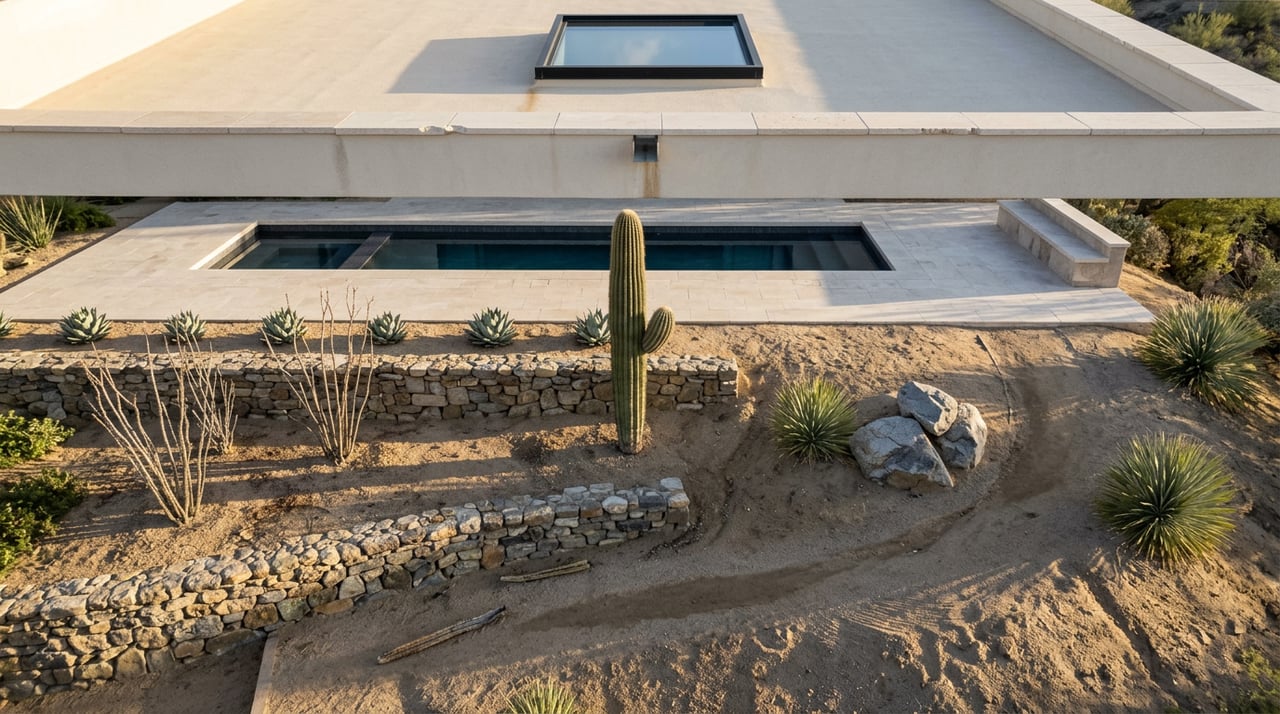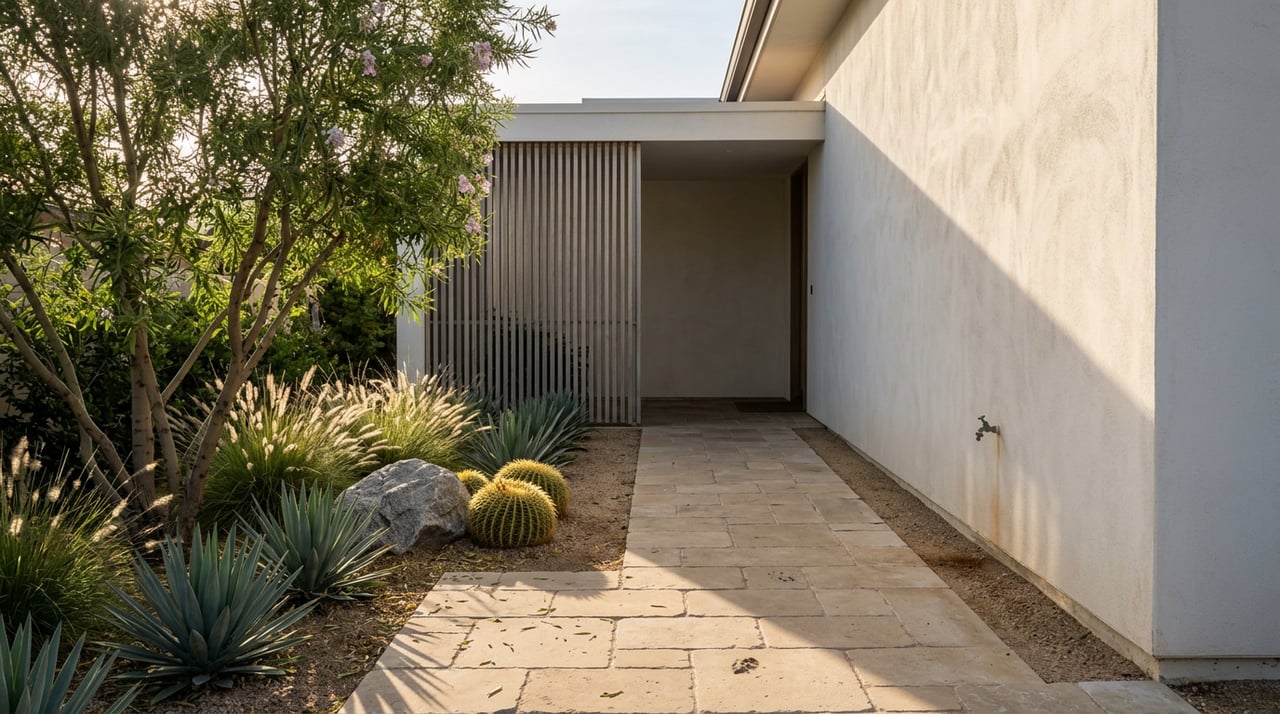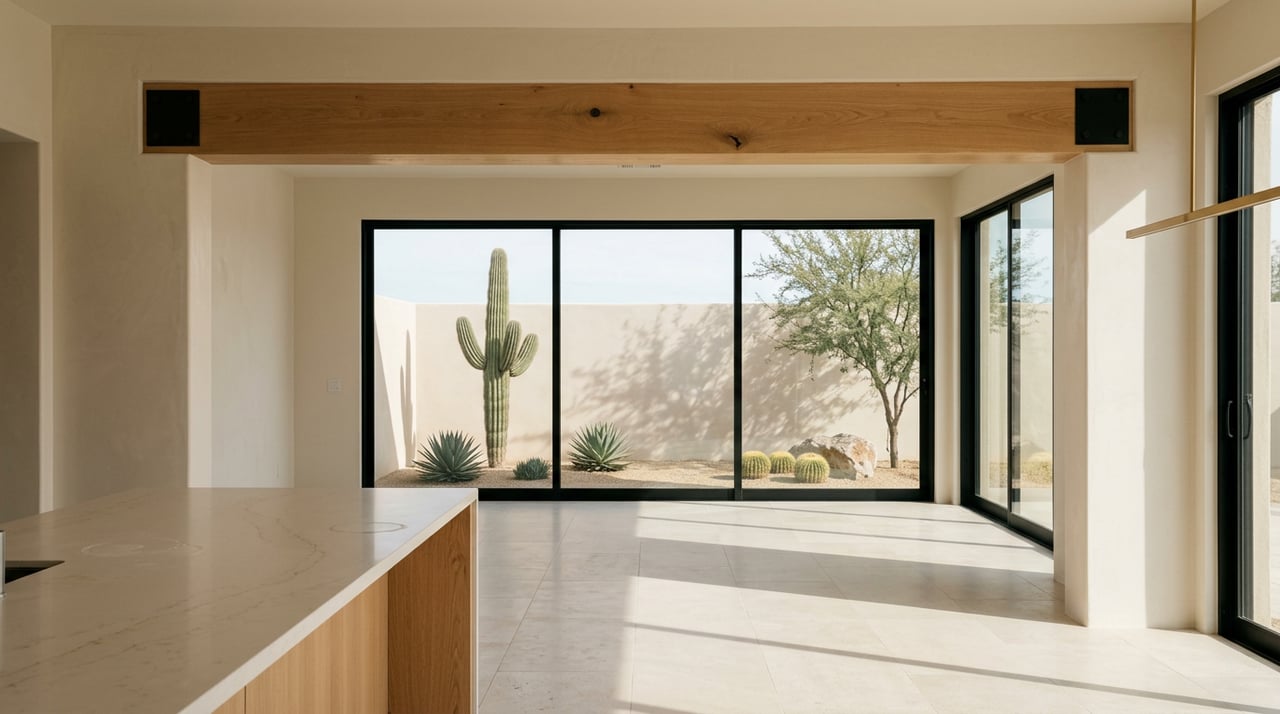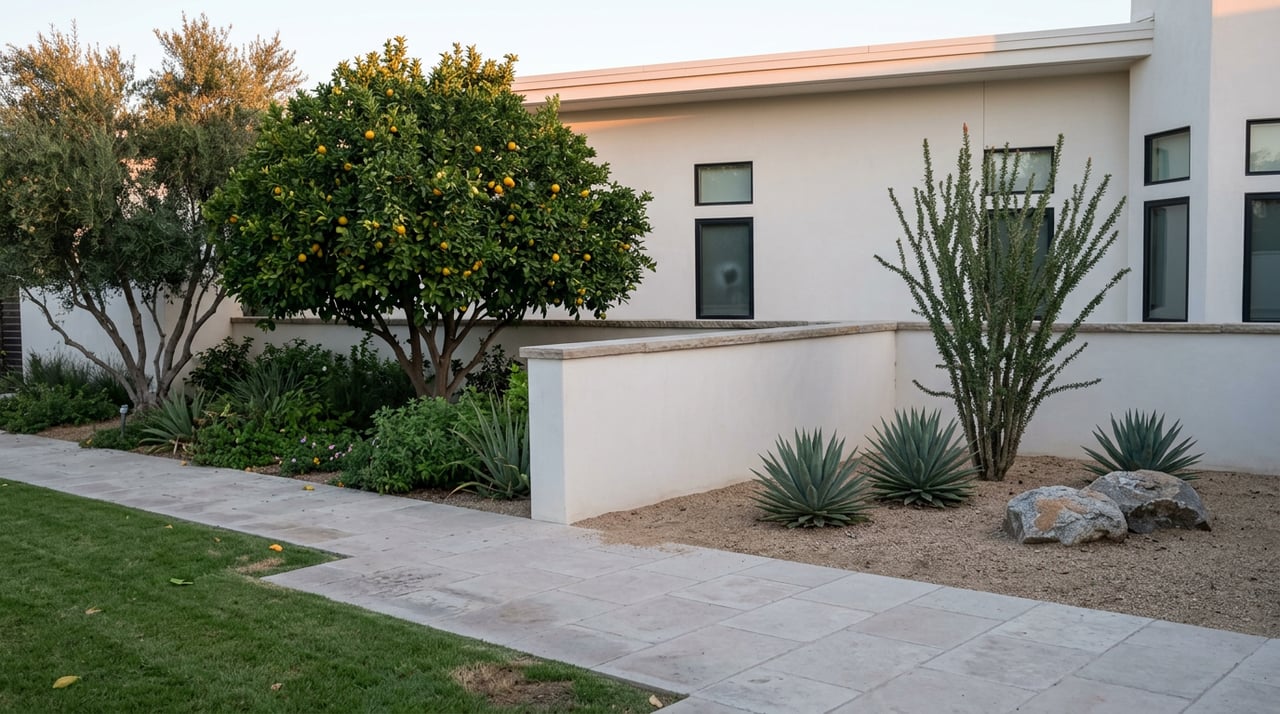
A buyer closes on a rebuilt house in Lower Arcadia, moves in over the summer, and assumes the elementary school is settled along with everything else. Then August arrives, the district mails the enrollment packet, and the address turns out to sit on the wrong side of an attendance line. The house is a mile from Hopi Elementary. The assignment says otherwise. Nothing about the listing, the neighborhood nickname, or the closing paperwork flagged it, because none of those things track school boundaries. The boundary tracks itself.
That kind of surprise is the tell. If you're comparing Arcadia to Arcadia Lite the way most guides frame it, as a budget tier where Proper means big and expensive and Lite means smaller and cheaper, you're comparing the wrong two boxes. The lines that actually move price in this corridor don't run along the informal Proper and Lite split at all. They run along a water gate and a school boundary, and neither one respects the nickname.
One Median Hides Three Markets
Start with the number every portal leads with. The most recent complete month of closed sales for the 85018 zip, which covers the broader Arcadia corridor, put the median sale price at $1,545,000 in June 2026, up 1.8 percent from a year earlier, across 79 closings. Active inventory sat at 108 listings with homes averaging 74 days on market, up sharply from where the corridor traded in 2021.
That single median is doing a lot of work it isn't equipped to do. The whole neighborhood only holds roughly 3,400 single-family homes, which means one $4 million rebuild trading in a given month can drag the median in a direction that has nothing to do with what a typical buyer will pay. Worse, that median blends at least three distinct transactions that behave nothing alike: a finished, renovated house selling as a home; an original-condition ranch selling as a renovation project; and a teardown lot selling as land, where the existing structure carries no value at all and the deal is really a dirt comp. Treating those three as one market is how a buyer ends up anchored to a number that describes someone else's purchase.
The Water Line Nobody Draws on a Map
Arcadia's premium over the rest of Phoenix traces back to a specific piece of infrastructure. In 1919, the Arcadia Water Company was founded to pull water off the Arizona Canal and irrigate what were then citrus groves. By 1924 the company had built several pumping stations and 15 miles of concrete piping to move that water through the neighborhood. When the groves gave way to postwar ranch homes, many of the lots kept the flood irrigation rights that came with the land.
That system still runs today, and it still runs the same way it always has. SRP controls delivery from the canal, and on a scheduled delivery day a zanjero, the utility's term for a ditch rider, opens a gate and releases water into the neighborhood's private lateral system. From there, the water is the homeowner's responsibility: moved through ditches or pipes the residents themselves own and maintain, spread across the yard by gravity, and drained off when the delivery is done. It's why some Arcadia streets look like they're sitting in a shallow lake for an hour after a delivery, and it's why the mature citrus and decades-old shade trees on those blocks exist at all. You cannot buy that canopy new. A production-built lot in Chandler or Gilbert can copy the architecture, the finishes, and the floor plan, but it cannot copy 70 years of flood-irrigated root growth.
Here's the part that breaks the Proper versus Lite framing. Irrigation rights travel with the specific parcel, not with the neighborhood label. Plenty of blocks inside the informal Arcadia Lite boundary, generally described as the area west of 44th Street toward the 32nd to 36th Street corridor, still carry active irrigation. Plenty of blocks inside Arcadia Proper have let a legacy system go dormant. A dormant system is not a neutral fact either. It signals deferred maintenance to a careful buyer and becomes a line item in negotiation, because the premium the seller is asking for assumes the irrigation is a working feature, not a relic.
The School Boundary Moves. The Nickname Doesn't.
The second invisible line runs through the same corridor and behaves the same way. Much of Arcadia and Arcadia Lite feeds into Scottsdale Unified School District, typically through Hopi Elementary and Ingleside Middle School on the way to Arcadia High School. But attendance boundaries are drawn by the district, not by whoever coined the neighborhood name, and they get adjusted from time to time. Two houses on the same street, on opposite sides of that line, are not interchangeable simply because they share a zip code and a nickname.
This is exactly what catches buyers off guard at the closing table and then again months later at enrollment. The fix isn't complicated, but it has to happen before an offer, not after: confirm the exact attendance assignment for the specific address directly with Scottsdale Unified, and treat the listing description as marketing copy rather than a boundary map.
Arcadia Proper and Arcadia Lite, Side by Side
| Arcadia Proper | Arcadia Lite | |
|---|---|---|
| Typical lot size | Quarter acre to half acre, some larger estate parcels | Commonly around 10,000 square feet |
| Architecture era | Mostly 1940s to 1970s ranch and Spanish-influenced homes | Mixed ranch and postwar infill, more contemporary rebuilds |
| Teardown activity | Active dirt-comp market on acre-plus lots | Present but less common given smaller parcels |
| Irrigation status | Varies by block, not guaranteed | Varies by block, not guaranteed |
| School attendance | Varies by address, not guaranteed | Varies by address, not guaranteed |
Notice what doesn't change between the two columns. Irrigation and school assignment sit outside the Proper and Lite distinction entirely, because they're governed by separate boundaries that were drawn for separate reasons a long time before anyone started using the word "Lite."
Why Two Trackers Can't Agree on Which One Costs More
Here's the detail that should settle the argument for good. Pull up more than one market source for price per square foot in this corridor and you'll find them disagreeing about which subarea is actually more expensive. One tracker will show Arcadia Lite running higher per square foot than Arcadia Proper. Another will show the reverse, with nearly the same two numbers just swapped between the two labels. That's not a rounding difference. It's a sign that the Proper and Lite distinction is informal enough that even professional data sources can't consistently agree on which side of the line a given block belongs to, let alone price it the same way twice.
If the nickname were actually organizing the market, that disagreement wouldn't exist. It exists because the real pricing lines run somewhere else.
Before You Write the Offer
A short list, in order:
- Confirm the exact school attendance assignment for the address, in writing, from Scottsdale Unified. Do not rely on the listing sheet or the neighborhood name.
- Ask directly whether the lot carries an active SRP irrigation delivery, or whether the system has gone dormant. Request the account status and any recent lateral or ditch company assessments.
- Establish which of the three markets the house is actually in: a finished renovation, an original-condition remodel candidate, or a teardown priced as land. Comp it against that category, not the corridor-wide median.
- Use days on market for the specific street and condition, not the zip-wide average, to gauge whether the asking price reflects current pace or last year's.
None of this shows up on a portal search filter. It's the kind of verification that only becomes obvious once you've walked enough of these blocks to know where the two real boundaries actually sit.
Frequently Asked Questions
Does turning off a dormant irrigation system lower ongoing costs? It can reduce lateral maintenance and delivery assessments, but it also removes the feature that supports mature landscaping and, by extension, part of what buyers are paying for on an irrigated block. Weigh the tradeoff before deciding.
Can a dry lot be added to an irrigation system later? Only if the parcel holds an existing right or turnout tied to the land. Rights don't attach to a property after the fact just because a neighbor has one.
How do I verify a school attendance zone before making an offer? Contact Scottsdale Unified directly with the exact address. Boundaries are adjusted periodically, and a listing description or a third-party site is not a substitute for the district's own map.
If you're trying to figure out which side of these lines a specific Arcadia or Arcadia Lite address falls on, that's the kind of block-by-block detail Vanessa Roark works through with buyers before an offer goes in, not after. You can start with the current Arcadia Lite listings and market notes or book a complimentary Home Marketing & Strategy Session to walk the specific streets you're considering.